Engineering Philosophy

I approach engineering as a balance between theory and reality. A system is only successful if it works reliably under real-world constraints, not just in simulations or ideal lab conditions.

Across my projects, I focus on clear system behavior, simple but robust control logic, and designs that can be tested, debugged, and improved through iteration. I value understanding why a system behaves the way it does, especially when it fails.

This portfolio reflects that mindset: projects built to function, adapt, and teach lessons that translate directly to real engineering environments.

AFROBOT Project

AFROBOT: AN AUTONOMOUS DRIVE PET

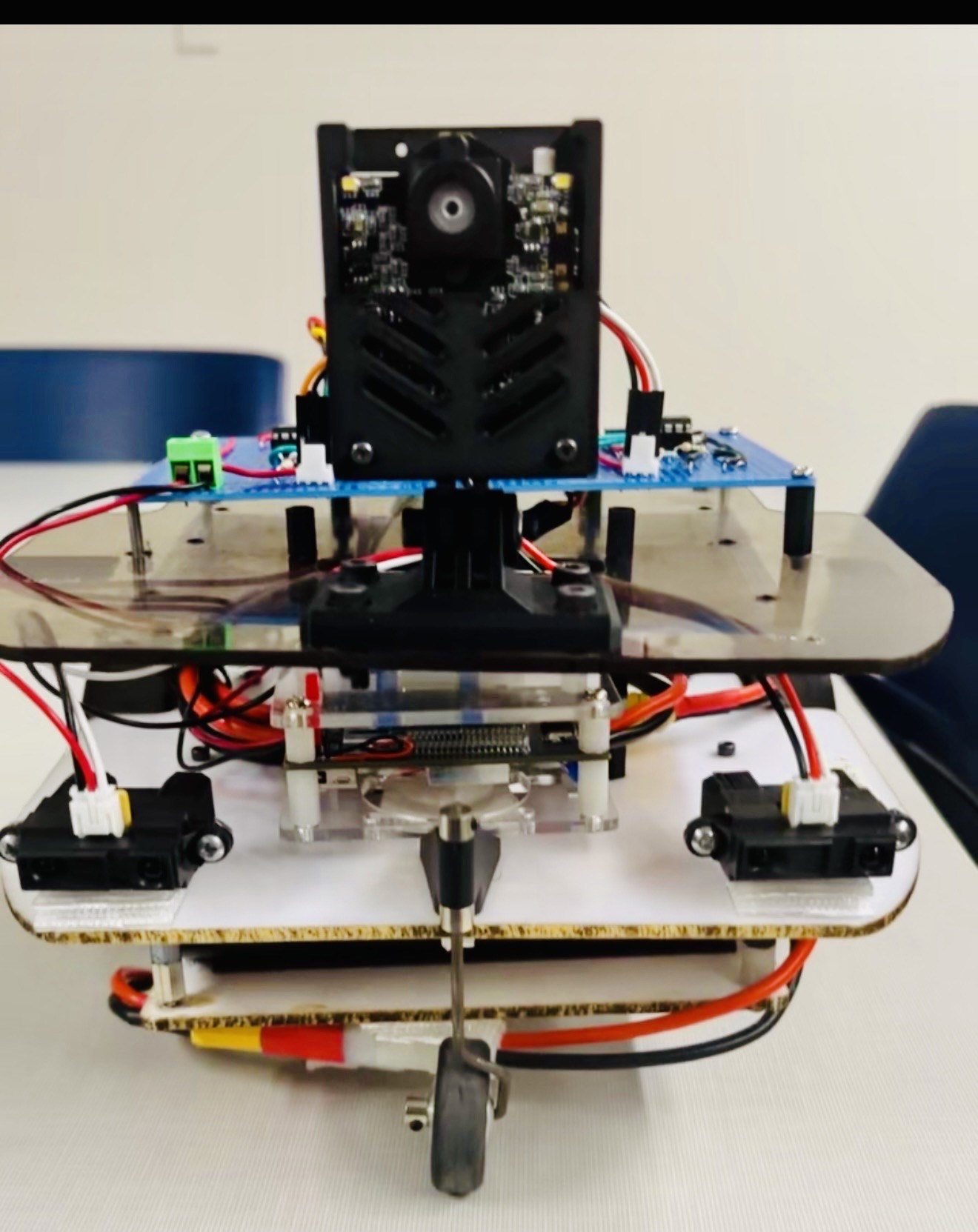
AfroBot was developed to explore autonomous robotic behavior through the integration of analog sensing, embedded control, and motor actuation. The project focuses on three main behaviors:

  • Cruise – steady forward motion
  • Track – follow a dark-green object
  • Escape – obstacle avoidance
These behaviors are coordinated using a subsumption architecture where higher-priority actions override lower-priority ones. Two Sharp GP2Y0A21YK IR sensors detect obstacles by producing a voltage that increases as objects approach. A Pixy2 camera outputs an analog X-position signal that guides tracking. All signals are processed through LM324 op-amp stages before reaching the Arduino, which controls two DC motors through a dual H-bridge. This project demonstrates how sensing and control systems combine to achieve autonomous navigation. The robot successfully executed all behaviors: maintaining straight motion, detecting obstacles at ~11 cm, and tracking a green object up to 1 meter away. Despite wiring failures and sensor replacements late in development, AfroBot ultimately operated reliably and met all project requirements.

Explore the Project
Turtle Duck Saltwater Toy

Turtle Duck Saltwater Toy

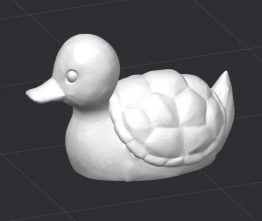
Ashton the Turtleduck 🦆 What started as a simple idea quickly turned into a real engineering challenge. My team and I designed and built a floating electromechanical system that uses ionized water to complete a circuit and power a motor, applying Ohm’s Law in a very hands-on way. I focused on the physical design and integration side of the project, working on the 3D-printed floating body, waterproofing the motor and electronics, and selecting materials that could survive prolonged exposure to water. Early testing revealed corrosion issues with copper, forcing us to rethink material choices and sealing methods. We tested performance by measuring voltage, current, and mechanical output, which exposed efficiency losses from friction, water resistance, and sealing—great reminders of how theory meets reality. This project gave me practical experience with mechatronics integration, troubleshooting, and designing systems that actually work outside the lab.

View Project
KINGBOT

Boe-Bot King

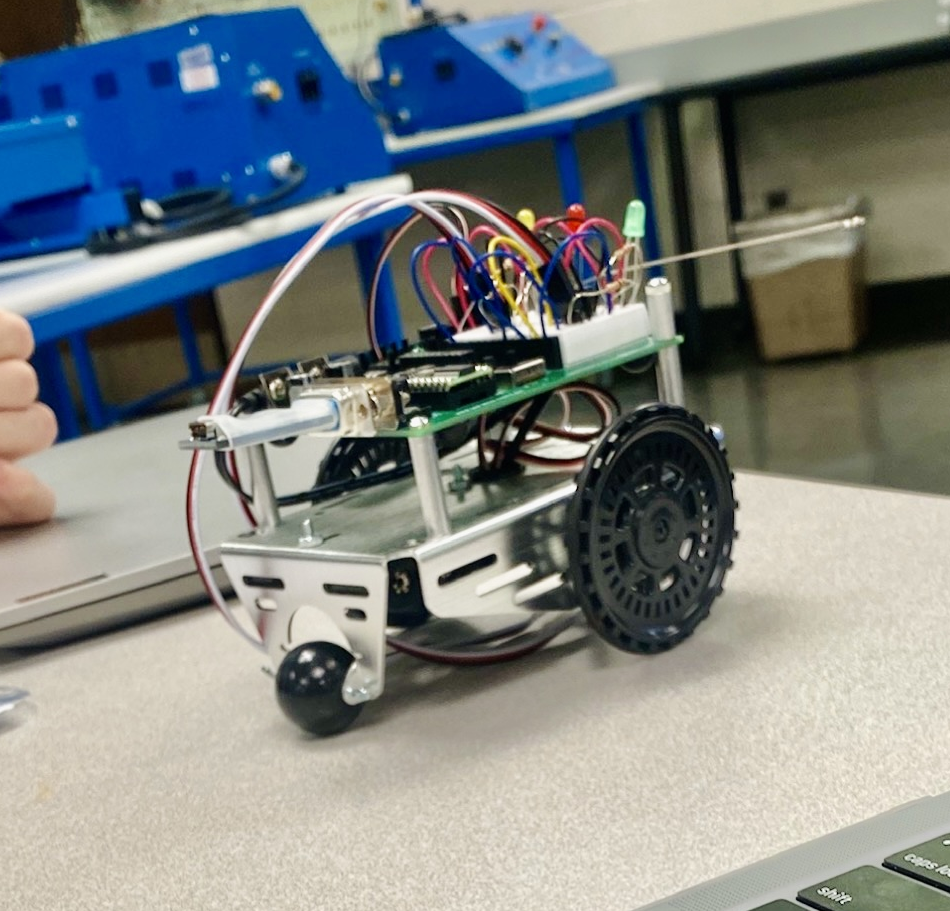
Boe-Bot King 🤖 was built to explore reliable, real-time decision-making using simple sensors. The robot follows a line using dual QTI infrared sensors and reacts immediately to changes in its environment without relying on complex state machines. I developed the line-following logic, tuned turning and correction behaviors, and integrated motion subroutines for forward movement, turning, reversing, and obstacle recovery using whisker sensors. One of the biggest challenges was achieving consistent sensor readings. Rather than relying only on software fixes, we solved this through hands-on troubleshooting by adjusting sensor height, alignment, and placement — a lesson in how hardware decisions directly affect control behavior. Through continuous testing and iteration, the robot became faster, more stable, and more accurate on the course, providing valuable experience in robotics programming, sensor integration, and translating theory into working hardware

View Project
Personal WebsiteProject

Personal Portfolio Website

This portfolio website was designed as an engineering project rather than a simple showcase. The concept evolved over more than six months, during which I continuously thought through the structure, layout, and overall design before writing a single line of code. Rather than rushing into implementation, I focused on how the site should function, communicate ideas clearly, and scale as my technical work grows.

The goal was to communicate technical work clearly, honestly, and without unnecessary visual noise. I treated the site as a system: organizing information logically, designing consistent layouts, and building interactive elements that explain how projects work rather than just what they look like. Special attention was given to structure, clarity, and scalability so the site can evolve over time. This project reflects how I think about engineering communication — systems should be understandable, maintainable, and grounded in real functionality. This website has only commas but never a point, it will be updated throughout the time.

View Project